
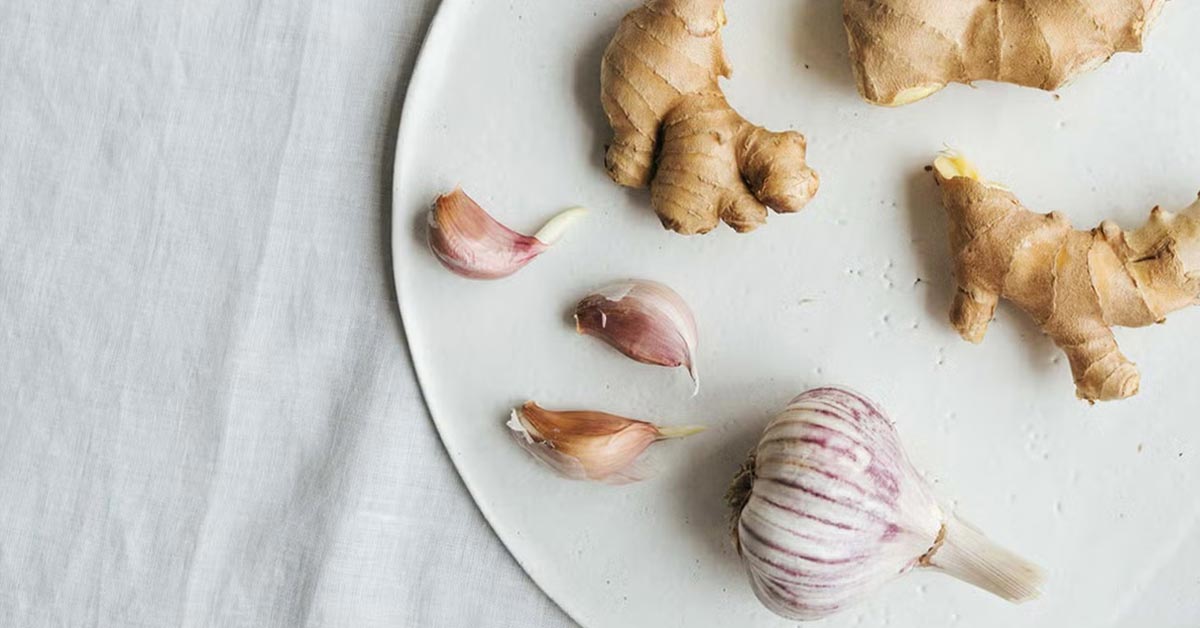
Garlic and ginger, two of the world’s most widely used medicinal plants, are traditionally praised for treating everything from infections to heart disease. But as their use in supplements and herbal products rapidly increases, scientists are raising an important question: how safe are these botanicals at the doses people commonly consume?
A new study published in Trends in Pharmacology and Toxicology provides one of the most comprehensive assessments to date, combining animal experiments with advanced computer-based toxicity predictions to map the potential risks of these popular natural remedies.
Why Researchers Studied Garlic and Ginger More Closely
Despite their reputation as “natural and safe,” garlic (Allium sativum) and ginger (Zingiberofficinale) contain potent bioactive chemicals that can influence the body’s organs, metabolism, and immune system. The research team notes that while these compounds deliver antioxidant, anti-inflammatory, and antimicrobial benefits, they can also become harmful in high concentrations or with long-term unchecked use.
The scientists, therefore, set out to examine safety using two complementary approaches: in vivo tests in mice and in silico modeling, which predicts toxicity using computational tools.
Mouse Experiments Reveal Dose-Dependent Risks
In the animal studies, researchers administered varying doses of garlic and ginger extracts to mice and monitored changes across multiple organs and blood parameters.
At modest doses, both extracts were generally safe. But at higher levels, the scientists recorded clear warning signs:
- Liver and kidney enzymes increased, signaling potential organ stress.
- Histopathological examinations showed structural changes in liver and kidney tissues.
- Behavioral abnormalities such as reduced appetite, lethargy, and in severe cases, paralysis, appeared at very high doses of garlic extract.
One study cited in the paper reported an LD₅₀ of about 3,034 mg/kg for garlic, meaning this dose was lethal for 50% of the mice tested. Ginger demonstrated a higher safety margin, with an LD₅₀ around 8,660 mg/kg, indicating lower toxicity compared to garlic.
Interestingly, when both plants were administered together, the combined LD₅₀ was about 5,477 mg/kg, suggesting a possible antagonistic interaction, meaning the two do not simply add up in toxicity but may counteract each other in certain ways.
Computer Modeling Supports Findings from Animal Studies
To complement the animal results, the research team conducted ADMET (Absorption, Distribution, Metabolism, Excretion, Toxicity) simulations for key compounds found in garlic and ginger.
The computer analysis revealed:
- Most compounds showed good predicted oral absorption, suggesting the body can readily absorb them when taken as supplements or herbal preparations.
- Several components, especially gingerols and organosulfur compounds, demonstrated favorable drug-like properties with manageable metabolism.
- Some molecules, including allicin and alliin from garlic, showed lower oral bioavailability, explaining why high doses may overwhelm the liver or gut.
- Highly lipophilic compounds such as zingiberene and phellandrene could accumulate in fatty tissues, highlighting the importance of monitoring long-term exposure.
These computational insights helped confirm and explain the patterns seen in the animal studies, offering a fuller picture of how these botanicals behave inside the body.
Powerful Benefits, but Caution Is Essential
The researchers emphasize that garlic and ginger remain highly beneficial when used appropriately. The paper highlights their proven anti-inflammatory, anticancer, antiviral, and cardioprotective effects, supported by decades of laboratory and clinical research.
However, the findings underscore that “natural” does not always mean harmless. Overconsumption, concentrated extracts, or self-medication without guidance can increase the risk of hepatotoxicity, gastrointestinal irritation, or other side effects.
A Step Toward Safer Use of Traditional Remedies
By pairing laboratory experiments with modern computational tools, the study offers a model for evaluating herbal medicines more rigorously. The authors advocate for standardized dosing, better regulation of herbal products, and further investigation into chronic and reproductive toxicity.
As garlic and ginger continue to be incorporated into supplements, drinks, traditional remedies, and functional foods worldwide, this research serves as a crucial reminder: even powerful natural medicines require responsible and evidence-based use.