
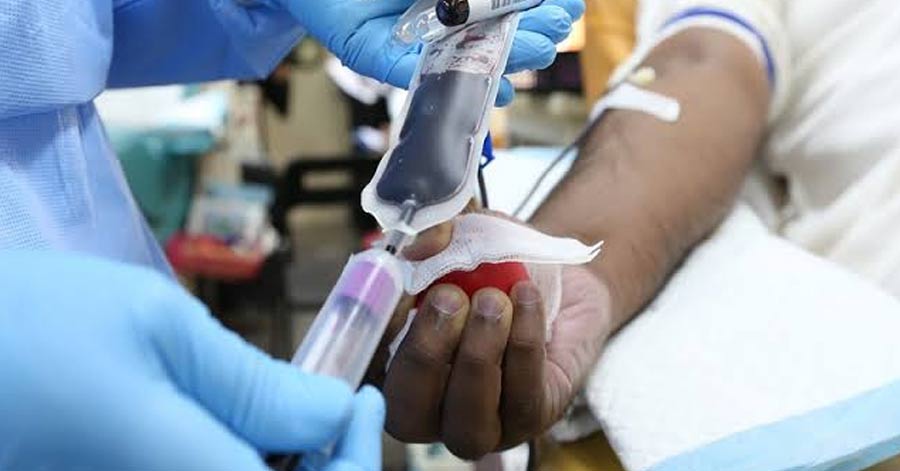
A new clinical investigation conducted at the University of Calabar Teaching Hospital (UCTH) has uncovered cases of occult Factor VIII deficiency among prospective blood donors in South-South Nigeria, raising concerns about transfusion safety, undiagnosed haemophilia, and the adequacy of donor screening protocols in the region.
The study, published in Trends in Pharmacology and Toxicology, analysedclotting factor activity levelsin 50 volunteer donors aged 15–45 years and examined levels of Factor VIII (FVIII) and Factor IX (FIX); two essential coagulation factors involved in the intrinsic blood-clotting pathway. According to the findings, 92% of donors displayed normal Factor VIII activity, while 2% registered near-normal activity and another 2% showed mild haemophilia-range FVIII deficiency. All donors demonstrated normal Factor IX levels, indicating no presence of haemophilia B.
The research team highlighted that the presence of mild haemophilia A (linked to Factor VIII deficiency) in otherwise healthy donors poses a subtle but significant risk to the blood transfusion supply chain. Undetected low FVIII activity in donated blood may diminish the haemostatic efficacy of transfused components, especially for recipients with pre-existing bleeding disorders or those undergoing major surgery.
Demographically, the study sample consisted predominantly of male donors (88%), with students making up 76% of participants. Most donors fell within the 15–35 year age category, reflecting Nigeria’s youthful population. These demographic factors did not significantly influence factor levels, as the study reported no statistical difference across age groups, gender, or donation frequency, key observations for public health and blood donation policy planning.
One notable finding was the impact of alcohol consumption on coagulation. Donors who consumed alcohol had significantly altered Activated Partial Thromboplastin Time (APTT) values, even though their Factor VIII and IX levels remained within normal ranges. This reinforces international guidelines advising donors to abstain from alcohol before donation and underscores the need for rigorous pre-donation screening in Nigerian blood banks.
Interestingly, the study also reported no significant correlation between APTT and FVIII/FIX activity levels (p>0.05). This challenges the widespread reliance on APTT as a standalone test for detecting mild coagulation disorders. The authors argue that standard clotting tests may miss subtle factor deficiencies and advocate includingspecific factor assays in donor evaluation—particularly for high-risk or first-time donors.
The researchers stress that while the overall findings reflect a generally healthy donor population, the identification of mild haemophilia A cases demonstrates the need for enhanced haemostatic screening protocols, especially in regions with limited diagnostic capacity. Implementing FVIII/FIX assays could help ensure that blood used for transfusion contains adequate clotting activity, ultimately improving patient outcomes.
The authors conclude that integrating coagulation factor screening, improving donor awareness, and strengthening national blood transfusion services will significantly enhance the safety and reliability of Nigeria’s blood supply.