
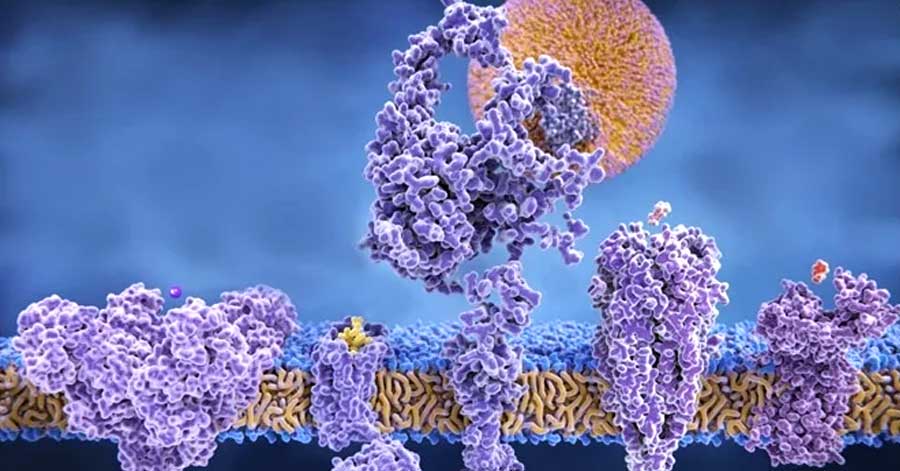
Scientists at the University of Kentucky have uncovered new insights into how specific ion channels help maintain the electrical balance of cells. This electrical stability is essential for normal development, muscle function, and overall health. The findings, published in the Journal of Pharmacology and Toxicology, explain how changes in two important channel families, K2P and NALCN, influence a cell’s resting membrane potential when external potassium levels vary.
Understanding the Electrical Baseline of Cells
Every cell maintains an electrical charge across its membrane. This is known as the resting membrane potential and it is crucial for enabling nerves to fire, muscles to contract, and organs such as the heart and brain to function in a rhythmic pattern. Two major contributors to this electrical balance are:
- K2P channels, which allow potassium ions to leak out of cells.
- NALCN channels, which allow sodium ions to move inward.
Imbalances in these channels are associated with disorders including cardiac dysfunction, epilepsy, and certain types of cancer.
What the Researchers Investigated
To understand the roles of these ion channels, the researchers conducted experiments on genetically modified Drosophila melanogaster larvae. They increased the expression of the potassium leak channel K2P and reduced the activity of the sodium leak channel NALCN by using RNA interference directed at both NALCN and its partner protein Mid1. The larvae were then exposed to a range of external potassium concentrations to mimic different physiological conditions. Intracellular recordings were taken throughout the experiment to monitor how the membrane potential responded to each potassium level.
Key Findings
Overexpression of K2P leads to increased hyperpolarization
Cells with higher K2P expression became much more electrically negative. Values near minus 80 mV were recorded in low potassium conditions. These cells also showed sharper voltage changes as potassium increased, indicating higher sensitivity.
Reduced NALCN mainly affects the cell at lower potassium levels
Flies with decreased NALCN or Mid1 expression displayed electrical differences only at lower potassium concentrations. At higher concentrations, their membrane potentials were similar to normal flies.
Sodium replacement produced unexpected depolarization
When sodium in the solution was replaced with NMDG, the cells depolarized more than predicted by membrane potential models. This suggests that additional physiological processes influence membrane voltage beyond classical equations.
A potential NALCN blocker altered electrical activity
When the compound CP 96345 was applied, the researchers observed spontaneous electrical events in some preparations. This type of response did not occur when the solvent alone was used.
Why These Results Matter
Resting membrane potential is a fundamental property of cells and small changes can disrupt muscle movement, neural communication, and rhythmic functions such as breathing. This study provides:
- A clearer understanding of how leak channels influence membrane voltage
- Insight into how diseased or abnormal tissues may behave
- A foundation for developing therapies that target these channels
Since many human disorders involve altered ion channel expression, these findings may guide future medical research.
What Comes Next
The authors note that real biological systems include many interacting factors. Future investigations may focus on how other ion channels compensate when K2P or NALCN levels are manipulated and whether similar effects occur in mammalian systems.